WTF Can We Do About Flooding?
After learning about all the different causes of flooding in Miami-Dade County, it's easy to feel overwhelmed.
Rising seas. Heavier rain. Rising groundwater. Aging infrastructure. We're just one community. What can we possibly do about all of that? It's enough to make you ask:
What the flood can we do about flooding?
The good news is that just as flooding has multiple causes, it also has multiple solutions. No single project will solve the problem on its own. But when we combine different strategies, we can reduce flooding, protect our communities, and make Miami more resilient.
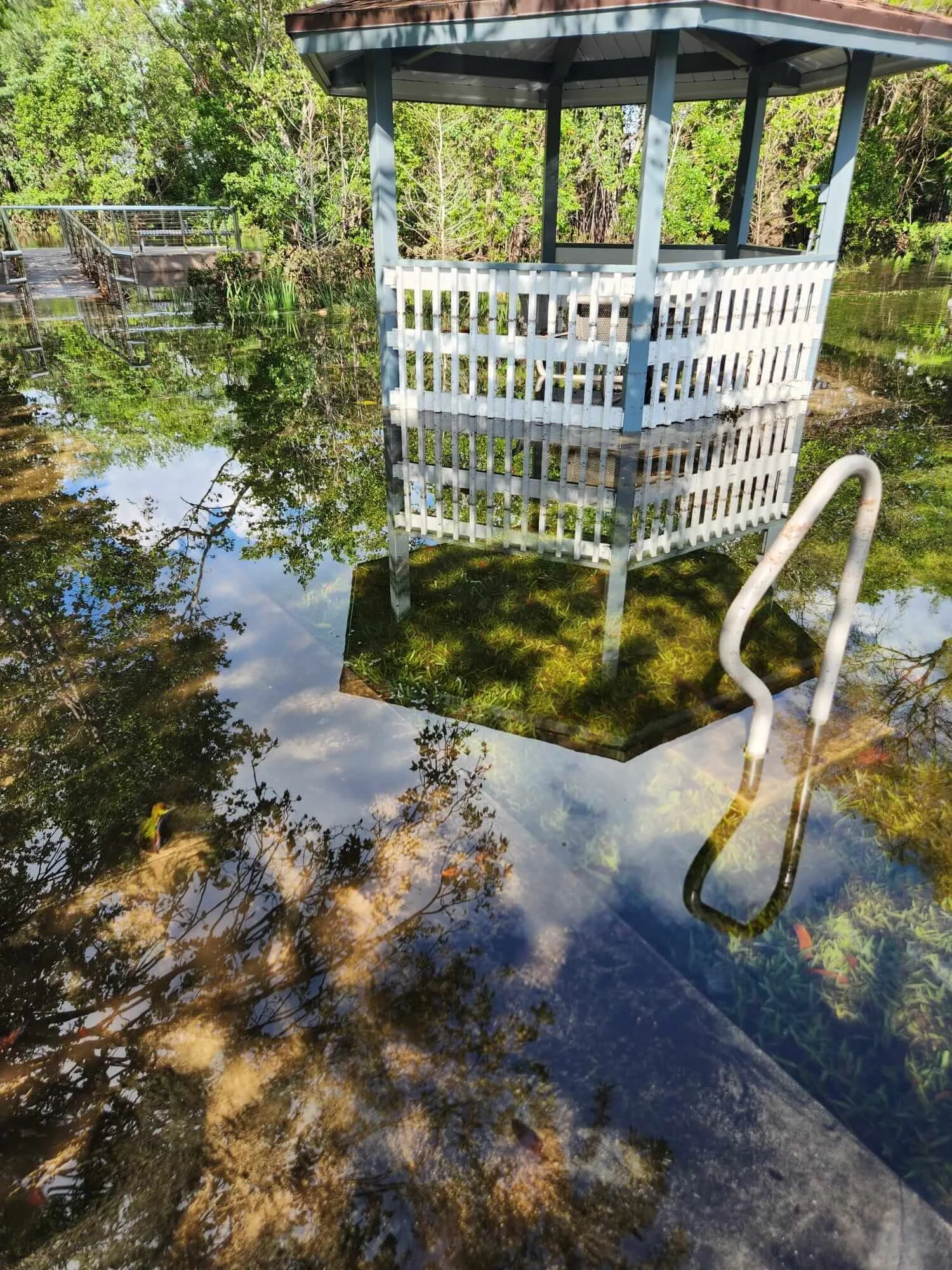
A park gazebo sits surrounded by standing water — a sign that Miami flooding isn't limited to streets and parking lots. As groundwater rises, even green spaces and parks in Miami-Dade flooding zones can become inundated.
Along the Coast
For decades, South Florida's approach to flooding was simple: move water away as quickly as possible. Today, we know we also need to work with nature.
Along our coastlines, mangroves, seagrasses, and coral reefs help reduce wave energy and storm surge before it reaches our communities. Together, these natural systems can reduce wave energy by as much as 97%, helping protect homes, businesses, and infrastructure. It’s estimated that coral reefs in South Florida protect coastlines for $665 million every year
They also provide additional benefits, including cleaner water, wildlife habitat, and cooler temperatures.
In Our Neighborhoods
Nature can help manage flooding in cities, too. Green spaces aren't just attractive—they're porous. They allow rainwater to soak into the ground rather than running across pavement and overwhelming drainage systems.
That's why communities are increasingly investing in solutions like bioswales, rain gardens, parks, and expanded tree canopies. Trees are especially valuable because they absorb water and help lower groundwater levels, giving rain somewhere to go before it becomes a flooding problem.
Under Our Streets
While nature-based solutions are important, they aren't enough on their own. Many parts of Miami-Dade rely on stormwater infrastructure that was built decades ago for a very different climate.
That's why we also need to invest in upgrading our "grey infrastructure"—the pipes, drains, pumps, and stormwater systems that move water through our communities.
In many places, this means installing larger drainage pipes and improving stormwater systems so they can handle today's conditions. These projects can also be paired with efforts to connect homes on septic tanks to sewer systems, helping keep sewage out of floodwaters and waterways.
On Private Property
Property owners and developers have a role to play, too. New development can be designed with more green space, porous surfaces, and better stormwater management so floodwater is handled on-site rather than pushed onto neighboring streets and properties.
Homeowners can contribute by planting trees, creating rain gardens, and reducing unnecessary paved areas wherever possible.
Working Together
The most important thing to remember is that flooding will not solve itself. Without action, flooding is likely to become more frequent and more costly. But the good news is that we already know many of the solutions.
Community leaders, elected officials, developers, businesses, and residents all have a role to play in building a future where Miami can live with water rather than constantly fighting it.
The question isn't whether solutions exist, but whether we'll invest in them before flooding gets worse. Because while flooding is an environmental challenge, it’s an economic one. Every flooded street, damaged property, business closure, and infrastructure repair carries a cost.
So what the flood is flooding costing Miami?
TAKE ACTION
What the Flood Are We Waiting For?
Miami's flooding problem isn't a mystery. We know what's causing it. We know what can help. What we need now is action.
Every year, our elected officials make decisions about stormwater infrastructure, coastal resilience, water quality, and development.
Sign the petition to tell them: Protect our neighborhoods and Biscayne Bay. Invest in stormwater infrastructure.